Traveling as a Woman in India: An Honest Guide from an Indian Woman
By Vaidehi · July 19, 2026 · 12 min read
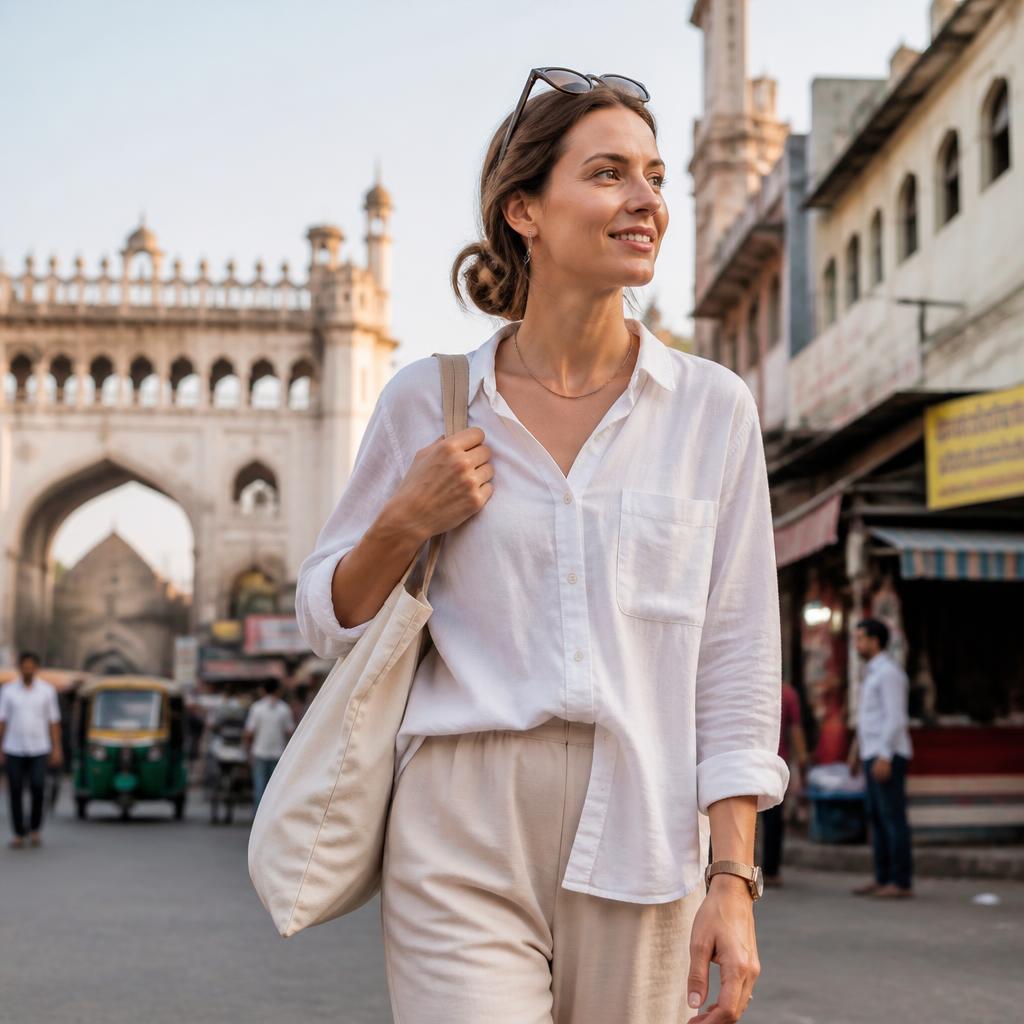
The honest answer: Women can and do travel beautifully in India, including on their own, but planning matters. No one can promise a trip without stares, awkward moments, or risks. A thoughtful plan helps you avoid many of the situations that create unnecessary stress and gives you reliable options when something feels off.
I was born in India, and I've lived in the United States for over twelve years. When an American woman tells me she wants to visit India but something in her gut says, “Wait, am I really ready for this?” I do not dismiss that feeling. India is vast, crowded, culturally layered, and sometimes intense. A woman can feel completely comfortable in one neighborhood and uneasy a few miles away. I understand the country from the inside, but I also understand the questions an American traveler asks before booking a flight. You do not need a glossy promise that India is perfectly safe. You need an honest picture of what you may experience and a plan for the parts you can control. Solo does not have to mean unsupported.
Can women travel safely in India?
Yes, many women travel through India independently and have rich, joyful trips. But I would never answer with a simple “India is safe” or “India is unsafe.” Both statements flatten a country that is almost impossible to generalize. No honest person can guarantee safety in any country, and I won't treat mine differently. Safe or unsafe is not the right question in my eyes. Safety depends on better and more practical questions: Which city? Which neighborhood? What time are you arriving? Who is meeting you? How are you getting back after dinner? Is someone accountable for your driver? Does your route match your actual comfort level? And here is what I will say: In my experience planning routes for first-time American travelers, the difference between a woman who has a wonderful trip and a woman who has a tense one is almost never luck. It's the plan.
If you want the official picture, then read the US State Department's India country information page before you book. The State Department advisory tells women not to travel alone in India and recommends strict precautions, reliable drivers, women-only transportation where available, and avoiding isolated areas. That guidance deserves to be read before you book. However, it does not mean every solo trip ends badly. It means the official guidance recognizes a meaningful risk, and your planning should reflect that reality.
How are women actually regarded in India?
I would say it's better than the headlines suggest, and worse than a tourism brochure would admit. India has a long history of strong and influential women in power, from Vedic-era philosophers and a woman prime minister elected in 1966 to today’s modern independent women in every sector.
The Indian subcontinent has produced intellectual traditions in philosophy, mathematics, medicine, and politics for thousands of years. Women appear in that history not only as symbols but also as thinkers and decision-makers. More than 2,500 years ago, during India’s later Vedic period, texts recorded philosophical debates involving Gargi and Maitreyi, two respected women thinkers who explored profound questions about existence, the self, and ultimate truth. Razia Sultan ruled Delhi in the thirteenth century. Rani Abbakka resisted Portuguese forces, and Rani Lakshmibai led troops during the uprising of 1857 against the British. I grew up with stories of women who fearlessly fought, governed, built, and led. These stories are not obscure. Every Indian schoolchild knows them.
What about modern India? Are women visible at the highest levels?
Modern Indian women are shaping India’s science, space missions, business, banking, entrepreneurship, sports, and many other fields. More than 100 women at ISRO (Indian Space Research Organisation), India’s equivalent of NASA, played direct roles in Chandrayaan-3, which was the first successful mission to land a spacecraft on the Moon’s south pole. No other country has done that yet. Indian women are also leading global companies. Leena Nair, who grew up in the small city of Kolhapur, is the global CEO of Chanel. Roshni Nadar Malhotra chairs HCLTech, one of India's largest technology companies. Falguni Nayar built the beauty retailer Nykaa into a listed company. Kiran Mazumdar-Shaw founded the biotech firm Biocon. Indra Nooyi, born in Chennai, ran PepsiCo for twelve years. Arundhati Bhattacharya became the first woman to chair the State Bank of India, the country's largest bank. Nirmala Sitharaman has run India's finance ministry. In sports, PV Sindhu has won two Olympic medals in badminton, and Mary Kom has won six world boxing titles.
There are many more powerful names that could be listed here. This is the India I want you to hold in your mind before you arrive: Women run companies, laboratories, banks, ministries, hospitals, homes, classrooms, and city streets every day. You are not entering a country where women are invisible. You are entering one where women’s public power and everyday vulnerability exist side by side.
What will I actually face as a woman on the street in India?
Most visitors are more likely to encounter staring, intrusive questions, unwanted comments, or logistical friction than to experience a serious incident. These experiences can still be tiring, especially when you are visibly foreign and already absorbing a new environment. They are more intense in some cities than in others.
You may hear the phrase “eve teasing.” It is Indian English for public harassment, including catcalling, comments, following, and sometimes unwanted touching. I dislike the phrase because it makes harmful behavior sound playful. It is not playful, and you do not have to minimize it.
Staring is very common, and it does not stop. Sometimes it comes from curiosity, particularly in places where foreign visitors are unusual. Sometimes it feels more aggressive. You do not need to spend your day deciding what every look means. The harsh truth is that women across India, including presidents and CEOs, deal with real safety issues, and visitors are not exempt. The goal is not to walk around frightened. It is to avoid moving through India on autopilot. Notice patterns instead: Is someone following you? Blocking your path? Asking where you are staying? Ignoring a clear no? Your discomfort is reason enough to move, call your driver, enter a shop, or ask for help.
Most women traveling in India, including local women, are sightseeing, eating out, taking trains, shopping, hiking, and talking with people. At the same time, they make small decisions that reduce exposure to predictable problems. One of my American colleagues took an especially adventurous approach and traveled solo on a bicycle from Bengaluru to Goa, a journey of more than 350 miles. I admire her courage and independence, but I would not recommend it for amateur travelers. That kind of trip requires a high level of experience, confidence, and comfort with uncertainty. She is also someone who has lived independently in a remote mountain setting in Vermont and runs her own business. Her journey was truly inspiring. It may not appeal to every traveler, but the point is that she completed it without any major safety issues. A good plan and mindful choices are what make the difference. Safety issues usually concentrate in predictable places: certain neighborhoods, certain hours, overcrowded transit, and unlicensed taxis. A plan that routes around those places removes most encounters before they happen.
Is Mumbai safe for women?
Mumbai is widely considered one of the safest big cities in India for women, and my own experience backs that up. Street life runs late, women are out at all hours, local trains have women's compartments, and the city's default posture toward a person in trouble is to help. If Mumbai were American, it would be New York: dense, indifferent to your presence, and quietly protective.
I'll give you my own data point, for whatever one woman's experience is worth. I have traveled alone in Mumbai well after midnight, more than once, and never faced any trouble. And Mumbaikars help. If you call out for help on a Mumbai street, people reach out without hesitation: strangers, shopkeepers, and the man selling tea. It is one of the things I miss most about that city. None of this makes Mumbai risk-free. It makes it a city where the ordinary urban rules you already know from home are usually enough.
Is Delhi safe for women?
Delhi is where I plan differently. Delhi is magnificent. It is India’s capital city, and its Mughal architecture, museums, markets, layered history, and food are extraordinary. However, it is also the city where I would not advise a first-time visitor to go out alone late at night without a local. Daytime Delhi with a vetted driver is a different and much better experience.
I recommend a hotel in a calmer, well-connected neighborhood, a prearranged airport pickup, sightseeing in daylight, and a vetted driver or guide for crowded areas. The staring can feel harder in Delhi, and some crowds can feel more intense, encroaching on your space, and feel more socially watchful or judgmental than Mumbai’s. This is not a secret; Indian women say it to each other all the time. As a solo traveler, I also recommend being alert and taking precautions in upscale places such as bars and lounges. Always watch your drinks and go with local people you trust. Delhi rewards structure. It punishes winging it.
An honest aside: This is the section I rewrote the most because I love Delhi, and it would be easier to soften this. I didn't because you are trusting me to tell you the truth, and the truth is that Mumbai at midnight and Delhi at midnight are different decisions.
What actually lowers the risk for women traveling in India?
Five decisions do most of the work. None of these requires special skills. They are simply bookings made in advance by someone who knows which ones matter.
Arrive in daylight. Many US flights land in India between midnight and 4 a.m. If you can, choose an itinerary that lands in daylight. If you can't, arrange a prebooked pickup with your name on a sign before you leave home. Never negotiate a taxi alone at 2 a.m. on arrival day when you are tired and in a new country.
Choose the neighborhood, not just the hotel. A lovely hotel on a dead street after 8 p.m. is a worse choice than a simpler hotel on a busy, well-lit one. This is the single question I spend the most time on when I plan.
Use one vetted driver, not a series of strangers. A driver who is accountable to someone and whose name and number you have for the whole stay changes the texture of a trip. It removes dozens of small negotiations, and each negotiation you skip is a risk you skip.
Book vetted guides for the crowded sites. A good local guide is a buffer in exactly the places where hassles tend to concentrate. The difference between wandering around a packed monument alone and walking through it beside someone the touts already know is enormous.
Dress modestly and go with the flow. It is unfair that what you wear changes how you are treated, and I won't pretend otherwise. But careful clothing reduces attention in most of India, and matching the local rhythm instead of fighting it makes you feel less watched.
Common Questions About Traveling as a Woman in India
Is it safe for a woman to travel alone in India?
Many women travel solo in India every year without serious incidents, and I have done it myself. It can be manageable with a carefully chosen route, daytime arrivals, well-chosen neighborhoods, trusted transportation, and support in more complex cities. No one can guarantee safety anywhere. A supported independent trip is often a better first experience than complete improvisation.
Can I use Uber or Ola by myself?
Many women do in major cities. Confirm the license plate and driver, sit in the back, share your live ride updates, and do not move to an unregistered vehicle. For airport arrivals, late nights, or long routes, I prefer a prearranged driver who is accountable to a hotel or travel planner.
Can I go out alone at night?
It depends on the city, neighborhood, and plan. A busy Mumbai neighborhood is different from an isolated street in Delhi or a smaller northern city. Use a trusted ride, stay in active areas, and do not assume that a destination that feels comfortable by day will feel the same after midnight.
What should I wear in India?
Light, comfortable clothing usually works well. In major cities such as Mumbai and Bengaluru, you will find young people dressed in Western-style clothing. Jeans, T-shirts, skirts and summer dresses are very common. At the same time, you will find many women in traditional Indian clothes such as kurtas and sarees. I would say modest clothing attracts less attention and reduces staring. However, curiosity-driven stares may follow you throughout the trip, regardless of what you wear. If you visit religious places such as temples, churches, and mosques, wear something that covers your shoulders and knees. Beach destinations such as Goa are more relaxed, while smaller towns and conservative neighborhoods call for more coverage. Clothing can reduce how much you stand out, but remember harassment is never the traveler’s fault.
India is truly a very special country; however, it is not always an easy or comfortable place. To enjoy the experience of traveling in India, you have to adjust your expectations. For example, things may not go as smoothly or efficiently as they do in your home country. The more flexible you can be, the better. You need awareness, good judgment, and a plan that matches who you actually are and what you want to experience. Once those pieces are in place, India can be not only manageable, but extraordinary.
If there is one place on the face of earth where all the dreams of living people have found a home, it is India.